
INDEX PERFORMANCE

Academic studies have found evidence for the existence of a positive link between innovation of a company and its financial performance, emphasizing the relevance of innovation in today’s environment in order to develop and differentiate over competitors1.
Innovation is rapidly accelerating, powered by major breakthroughs in the 20th century, such as computing and the invention of the internet. A new age of innovation could revolutionize and alter business functions at an even higher speed.
The US Innovative Leaders 5 Index aims to provide exposure to the most innovative companies, which may exhibit higher future revenues as a result of such innovation.
1Academic studies include, among others, Jansen, van den Bosch & Volberda (2006), Hietanen & Tikkanen (2010) and Bigliardi (2013).
INDEX PERFORMANCE
PERFROMANCE ANALYSIS AS OF
The charts and tables below show an analysis of the back-tested levels and composition of the US Innovative Leaders 5 Index as of. The US Innovative Leaders 5 Index was launched on . The prior performance shown is simulated.
INDEX PERFROMANCE
Source: BNP Paribas from to.
INDEX STATISTICS AS OF
Source: BNP Paribas from to .
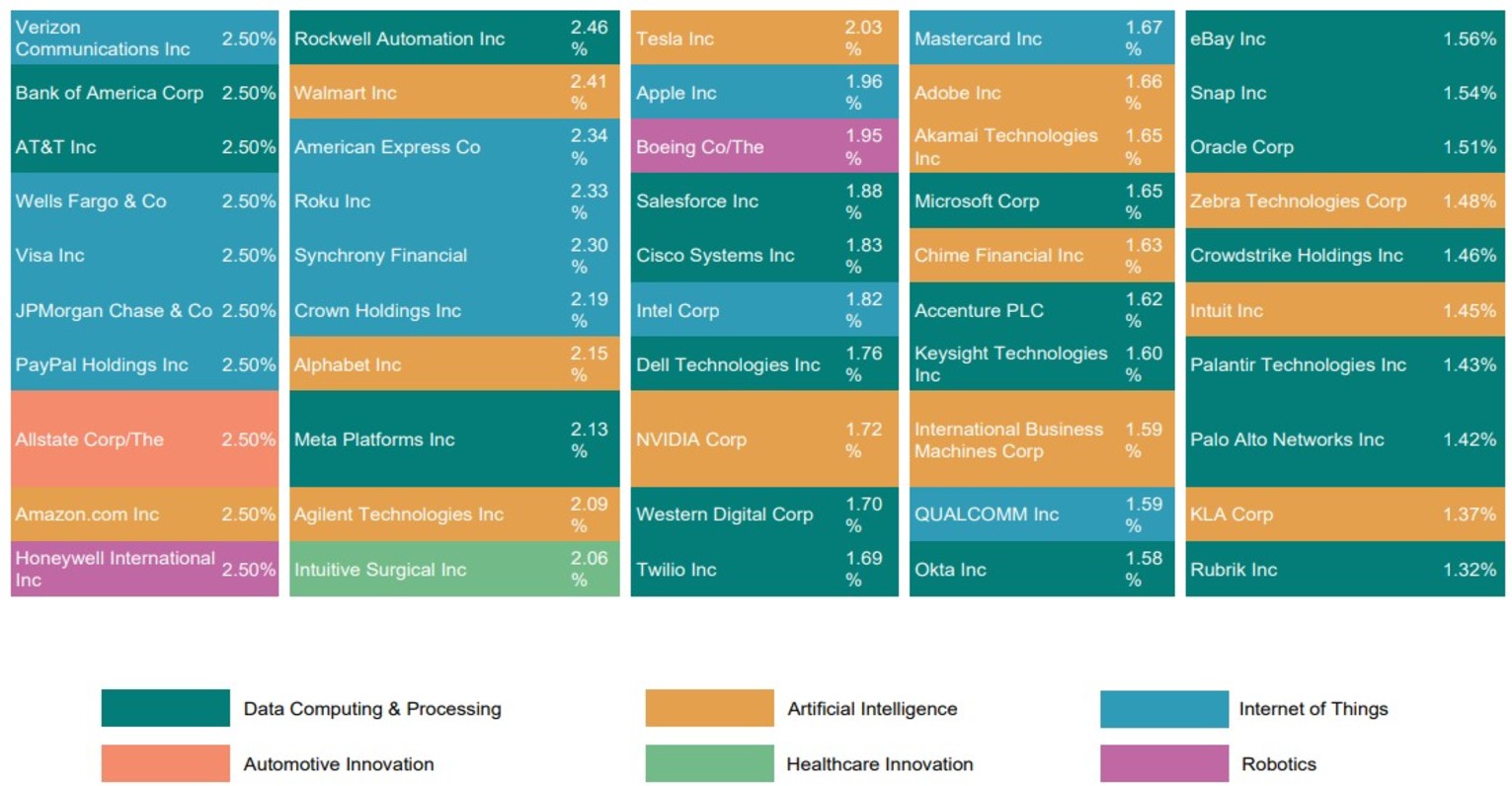
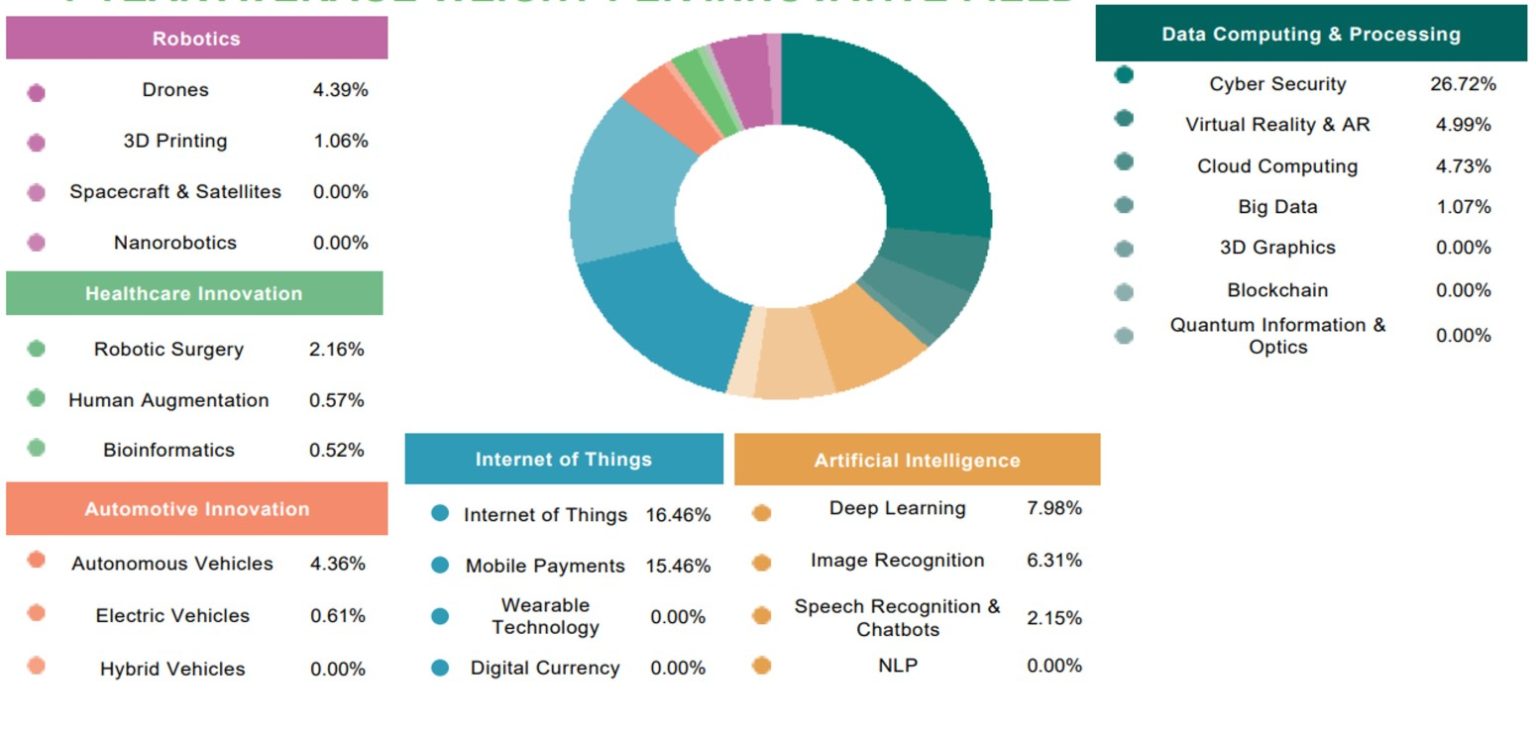
YEAR AVERAGE WEIGHT PER INNOVATIVE FIELD AS OF JANUARY 30th 2026
Past performance is not an indicator of future performance. The US Innovative Leaders 5 Index is based on Hypothetical Past Performance Data (“PPD”) prior to . Because the US Innovative Leaders 5 Index did not exist prior to this date, all retrospective levels provided in the graph and table above are simulated and must be considered illustrative only. The presentation of hypothetical data reflects the deduction of fees and charges. These simulations are the result of estimates made by BNP Paribas at a given moment on the basis of the parameters selected by BNP Paribas, certain assumptions that may or may not hold in future periods, of market conditions at this given moment and of historical data, which should not be used as guidance, in any way, of the future results of the US Innovative Leaders 5 Index.
RISK WARNINGS FOR HYPOTHETICAL PERFORMANCE DATA:
- Future performance of the Index may be worse than hypothetical historical results. All levels are simulated and must be considered hypothetical and illustrative only. The actual performance of the Index may bear little relation to the hypothetical historical results.
- BNP Paribas makes no recommendation as to the suitability of the Index for investment. You should reach a decision after careful consideration with your advisors.
- Future performance of the Index may be worse than past and hypothetical historical results.
- The methodology underlying the Index may not be successful — No assurance can be given that the Index methodology will achieve its goals.
- Numerous factors (changes in: interest rates, investor expectations, economic results, regulation, liquidity, etc.) may affect the price of the components of the Index.
- Hypothetical past performance is based on criteria applied retroactively with the benefit of hindsight and knowledge of factors that may have positively affected its performance, and cannot account for all financial risk that may affect the actual performance.
- The Index has limited historical information and publicly available information on the Index is limited.
- The presentation of hypothetical historical performance reflects the deduction of fees and charges applicable to the Index.